English Ivy: How to stop it in its tracks and keep it from coming back
By Ellen Kinzer and Bob Schwartz , ACWA Board Members
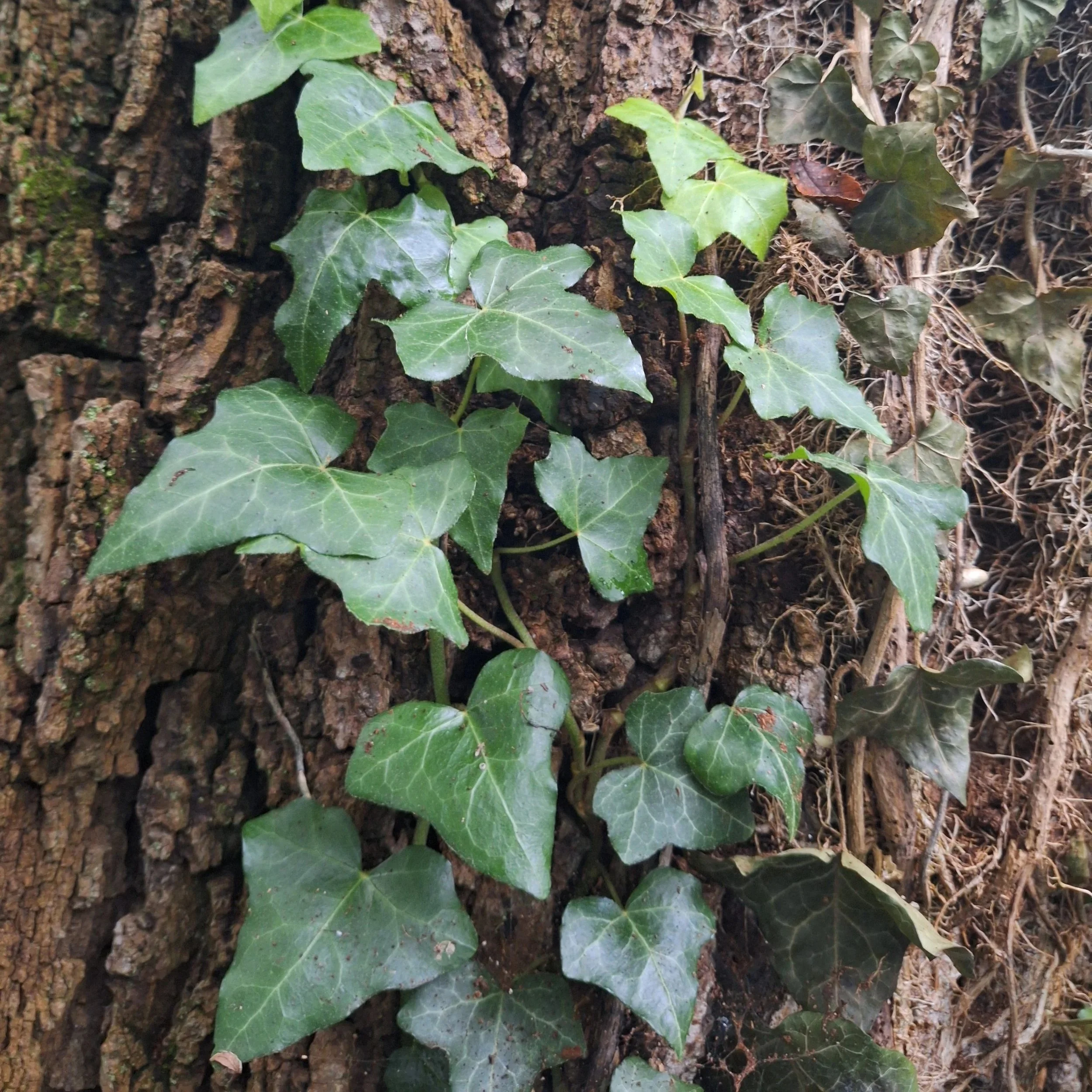
English ivy (Hedera helix)
Most people have at least one invasive species on their property- that is how invasive species work! In the many historic areas of Washington county, that invasive species is English ivy (Hedera helix). Introduced to North American in the 1700s, and widely planted as an ornamental in the 1800 and 1900s, English ivy’s cache in traditional cottage garden design is unmatched. The ivy-covered walls of English estates, brought to America. Quite an idea, right?
Still today, English Ivy is one of the most common invasive around homes because it was so widely sold as a great ground cover. And it is a ground cover indeed! Unfortunately, the cutesy ivy-covered walls are spreading into the woods, turning your favorite trees into a scene straight out of Bridgeton.
Its an aggressive spreader English Ivy is a clinging vine with aerial rootlets allowing it to climb nearly any surface, including homes and trees. If there is no support, the spreading vines sprawl across the ground covering anything in its path.
English ivy produces berries that develop from October to May, typically ripening into a dark purple or black color during the winter months. The berries are tasty to birds and, while they provide high-fat calories to our avian friends, they are toxic to mammals and often thrive at the expense of a diversity of food throughout the year. Birds spread the seeds far and wide helping distribute the plant far beyond where it was once planted by humans adding to its invasive tendencies.
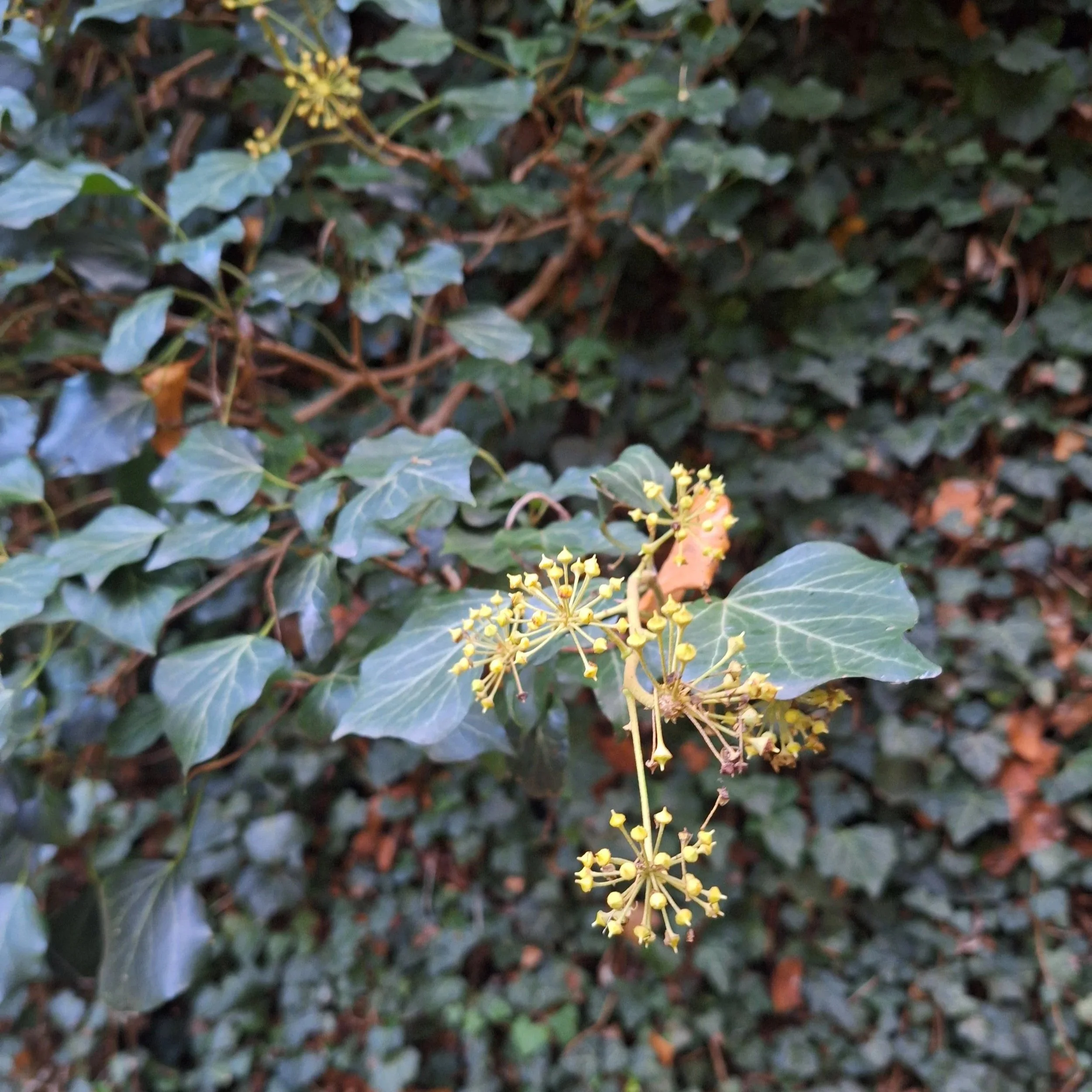
English Ivy flowers give way to newly developed berries, a favorite for birds but contributes to its agressive spread.
On the property where we live, English Ivy coats most unmaintained surfaces - whether rock wall, barn, or tree trunk. There, its dense foliage blocks sunlight and limits growth of the tree and other native plants around it. Its clinging vines can damage trees by loosening the bark, holding moisture against the trunk, and adding weight which can make trees more vulnerable to falling or branch failure during severe weather events. This also applies to the historic buildings that it is often found climbing. Its vines can degrade the material of the walls it climbs, cause rot issues on wooden buildings, and create engineering loads that surpass what the structures where build for.
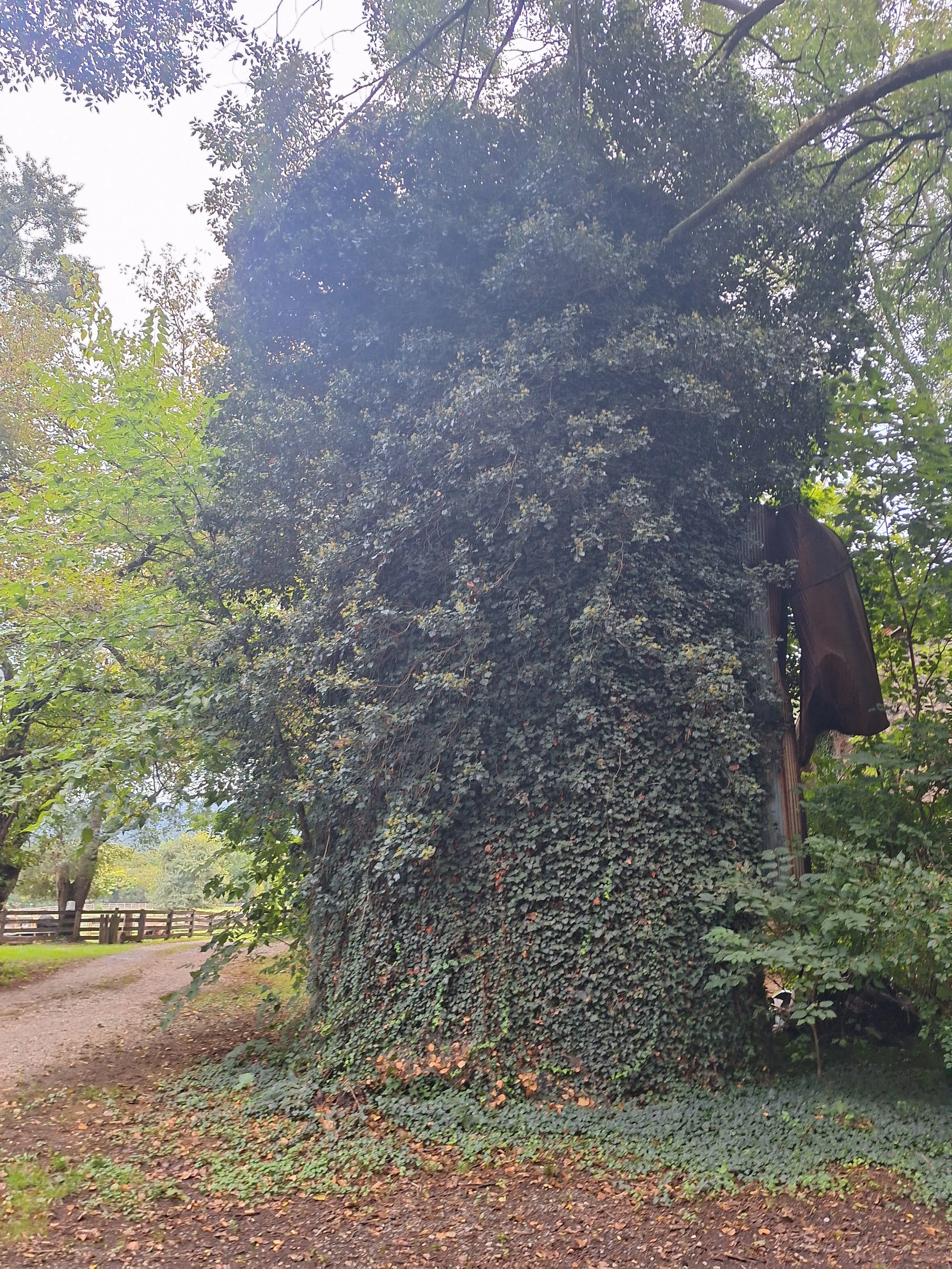
An old silo completely covered in English Ivy.
So, how do we save our trees and historic buildings? The answer is smart, targeted effort.
Hand-pulling small infestations is an easy way to keep a small problem from getting bigger. On our property, hand-pulling English ivy anytime we see it has helped keep it from forming new colonies.
However for larger infestations, and particularly large mats on walls, one solution is the targeted application of herbicide through the stump-cut method. While broadcast herbicide can harm ecosystems, targeted application for invasive plant control and reintroduction of native species can dramatically speed up the accrual of ecosystem benefits vs. costs.
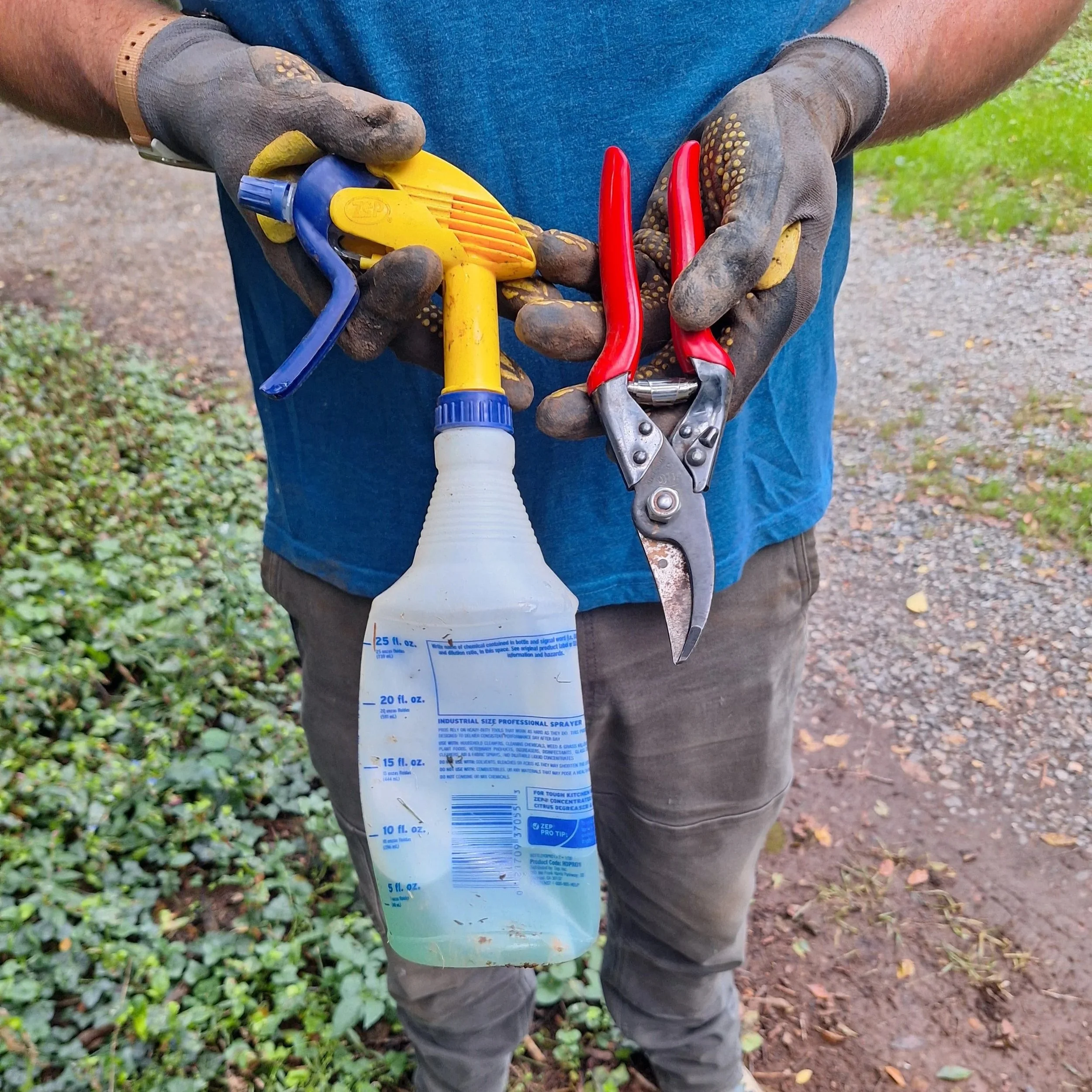
Simple tools are all that's needed to begin to tackle invasive vines like English Ivy.
To use the stump-cut method with herbicides:
Timing is key: A great time to do this is the beginning of autumn, when the plants are starting to store nutrients in their roots and will uptake the herbicide best (and it cools down a bit for you!).
Tools:
Hand sheers or loppers,
spray bottle or dauber containing herbicide.
Gloves appropriate for herbicide use.
Trash bags to dispose invasive vines, especially if there are berries present.
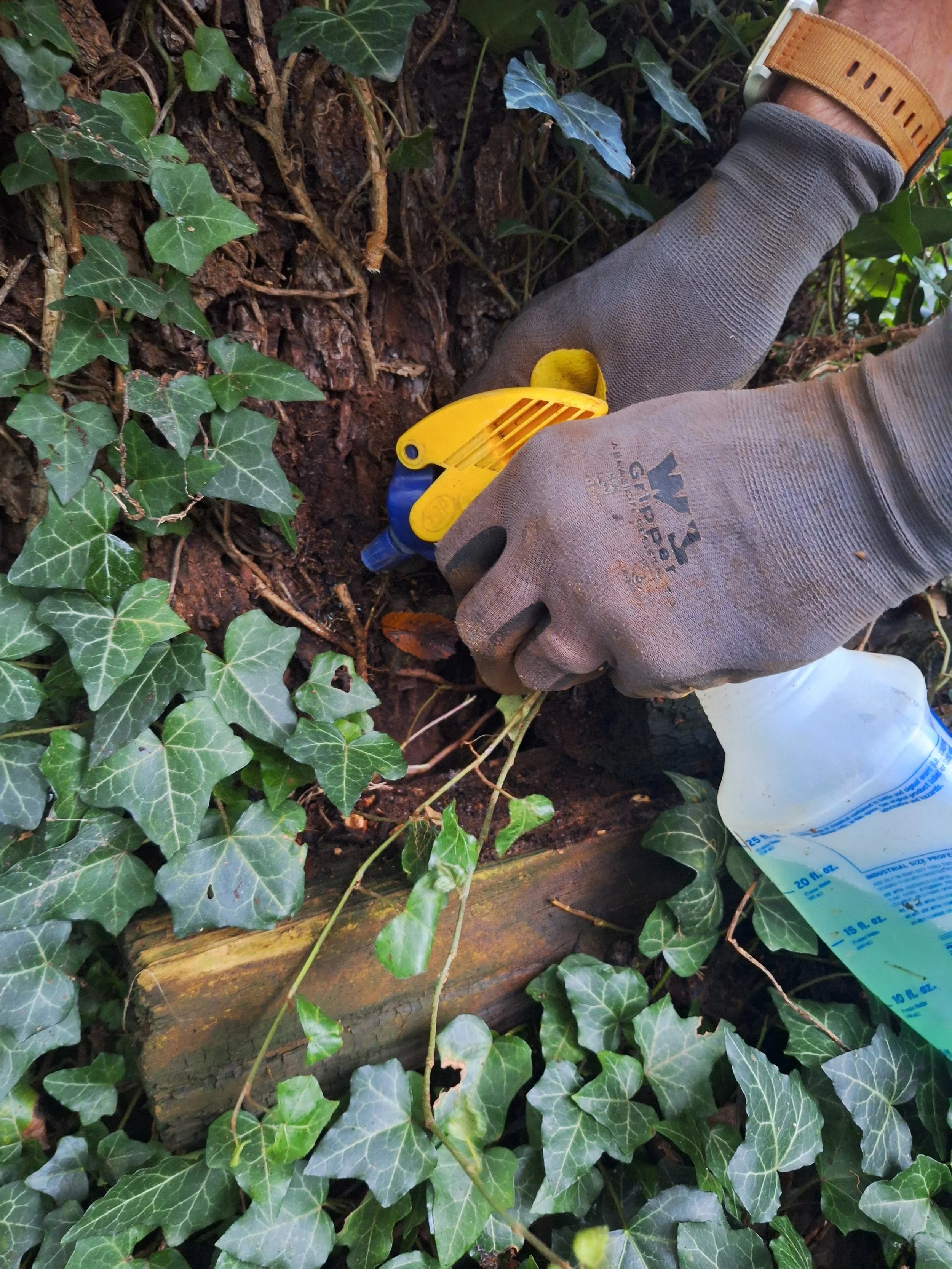
Spraying only the vine/stem of the cut ivy.
Herbicide: The best option for most stump-cut treatments is triclopyr with a carrier oil, sold commercially as either a generic concentrate or ready-to-use option (Pathfinder 2). Another available option is TordonRTU.
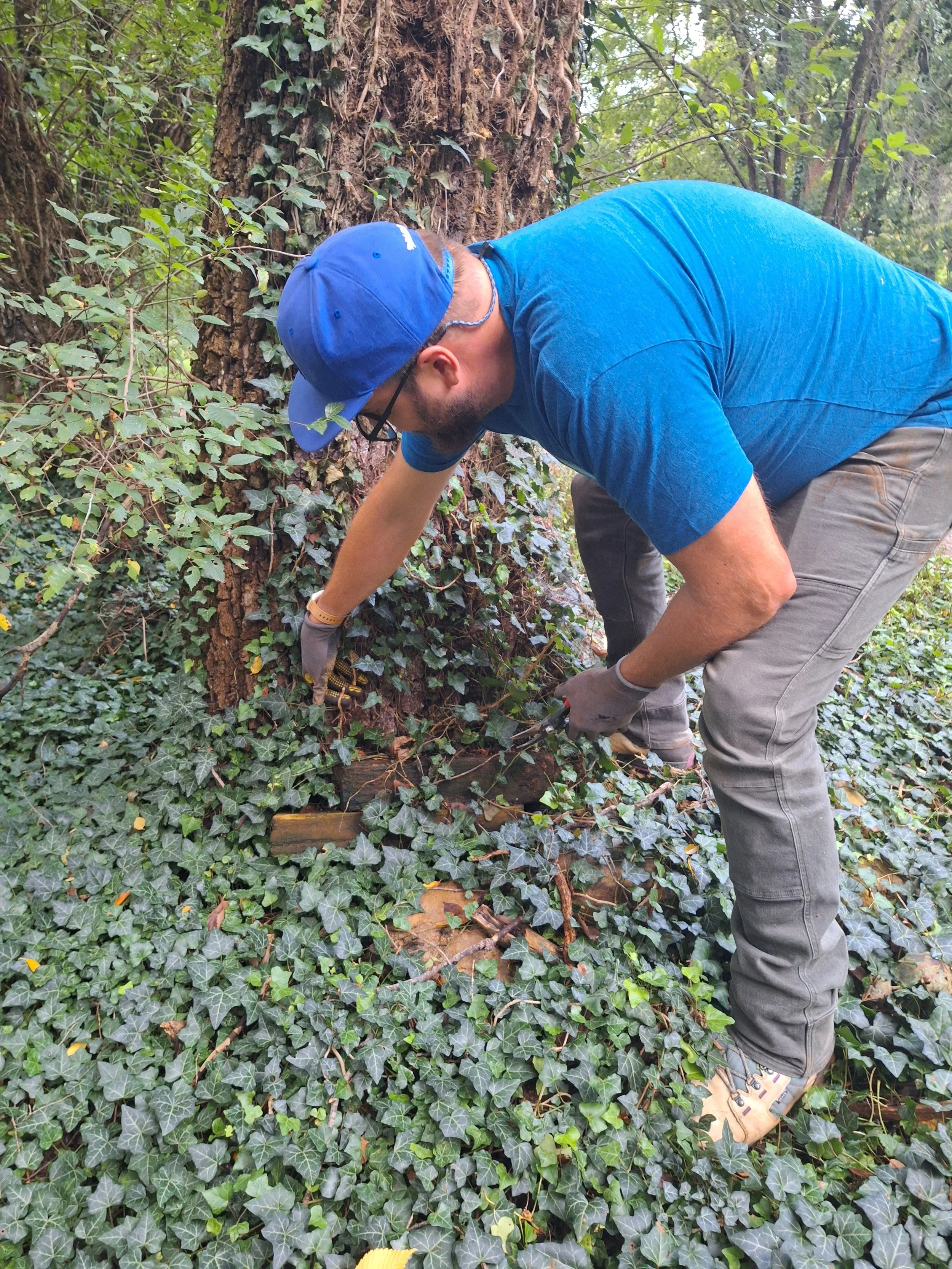
Create a “window” to apply herbicide: cut the vines at ground level and swiftly apply the appropriate herbicide with a targeted spray bottle or dauber (you may need to cut them a little higher up as well, creating a “window” and giving you more space to apply the herbicide). * (See PA DCNR Fact Sheet (PDF) for more details)
This is the method we’re using on our property to free trees, historic rock walls, and several barn walls from English ivy.
To treat large patches covering the ground, you will first need to cut the leaves via weed trimmer or mower and spray a foliar herbicide like triclopy. Since the leaves waxy coating makes it very difficult for the herbicide to be absorbed by the plants, the initial cutting is important.
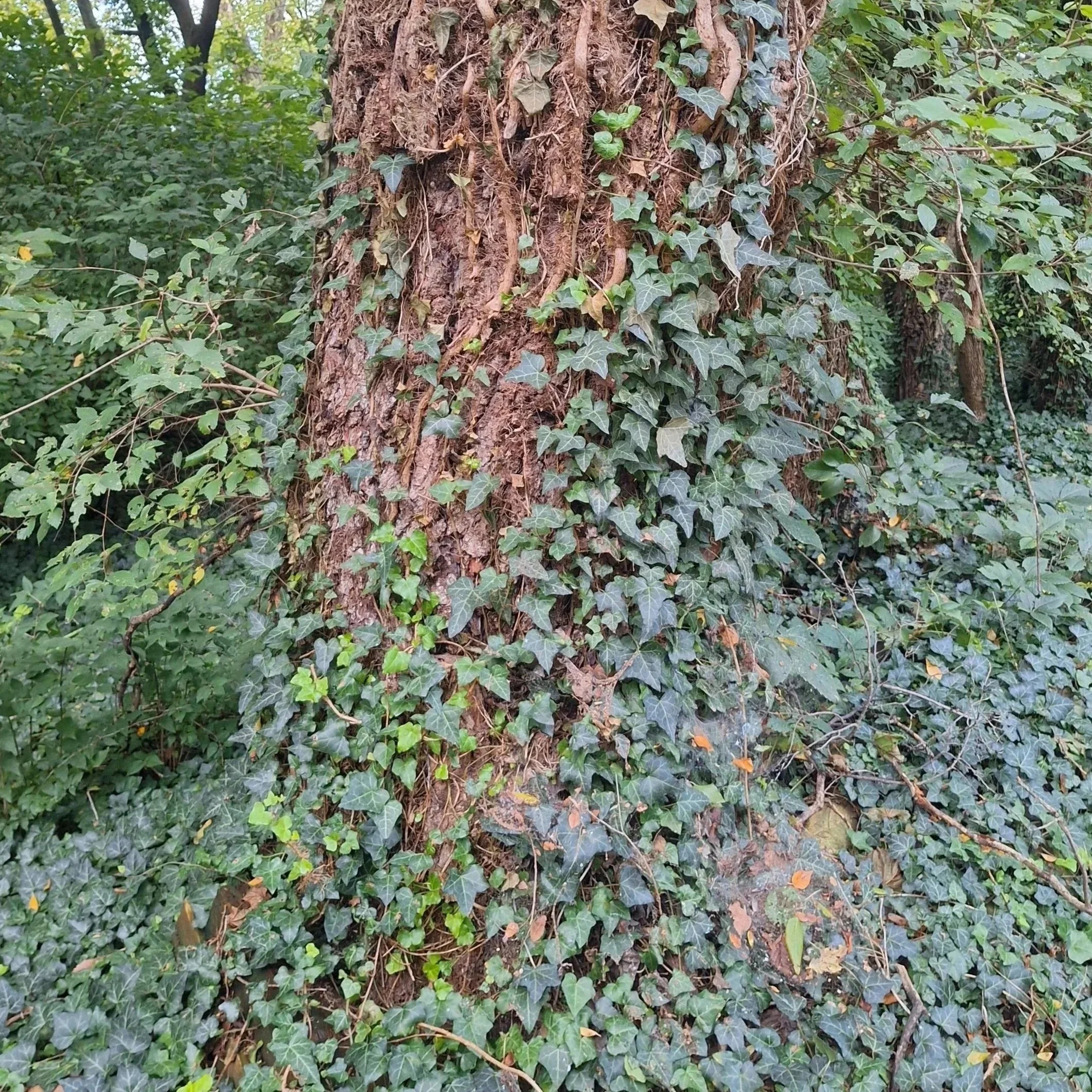
Before using the “Stump/Cut” Method
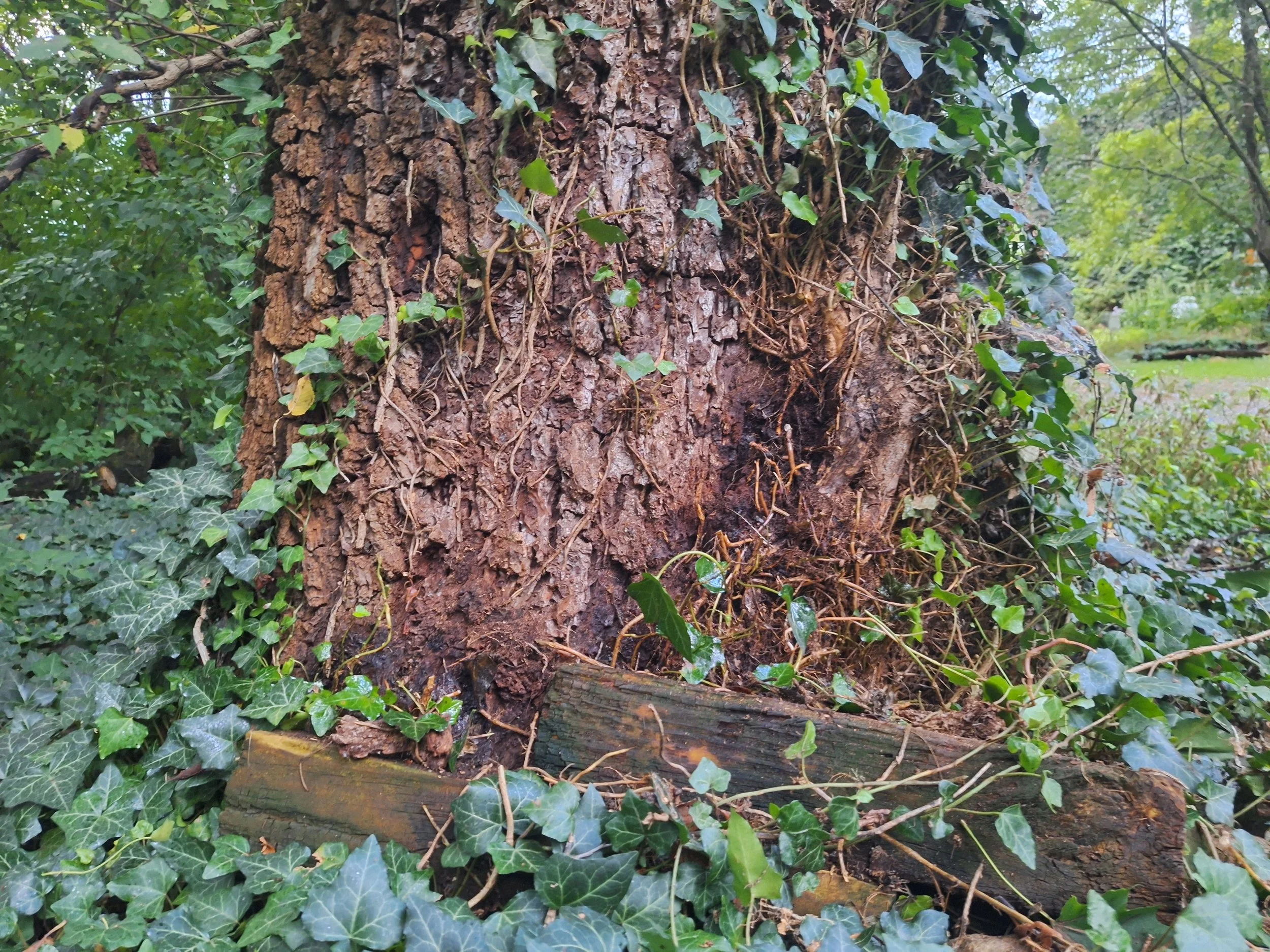
Post “window” cutting and spraying
Patience is important. Once you’ve treated the plants, it may take awhile for the upper portion to fully die (we treated a large patch a month and it’s still green!). English Ivy is a very hardy plant and can take several months to die and turn brown.
Resist the urge to pull the vines off trees and walls with mortar before they dead to avoid damaging the supporting structure. After the ivy is dead and brown, the aerial rootlets will be dried out and reduce potential damage to what the ivy was climbing.
In areas of large infestation, repeat treatment may be necessary to be fully effective on all the vines. Watch for new green growth in subsequent growing seasons to identify vines that need additional cutting and spraying.
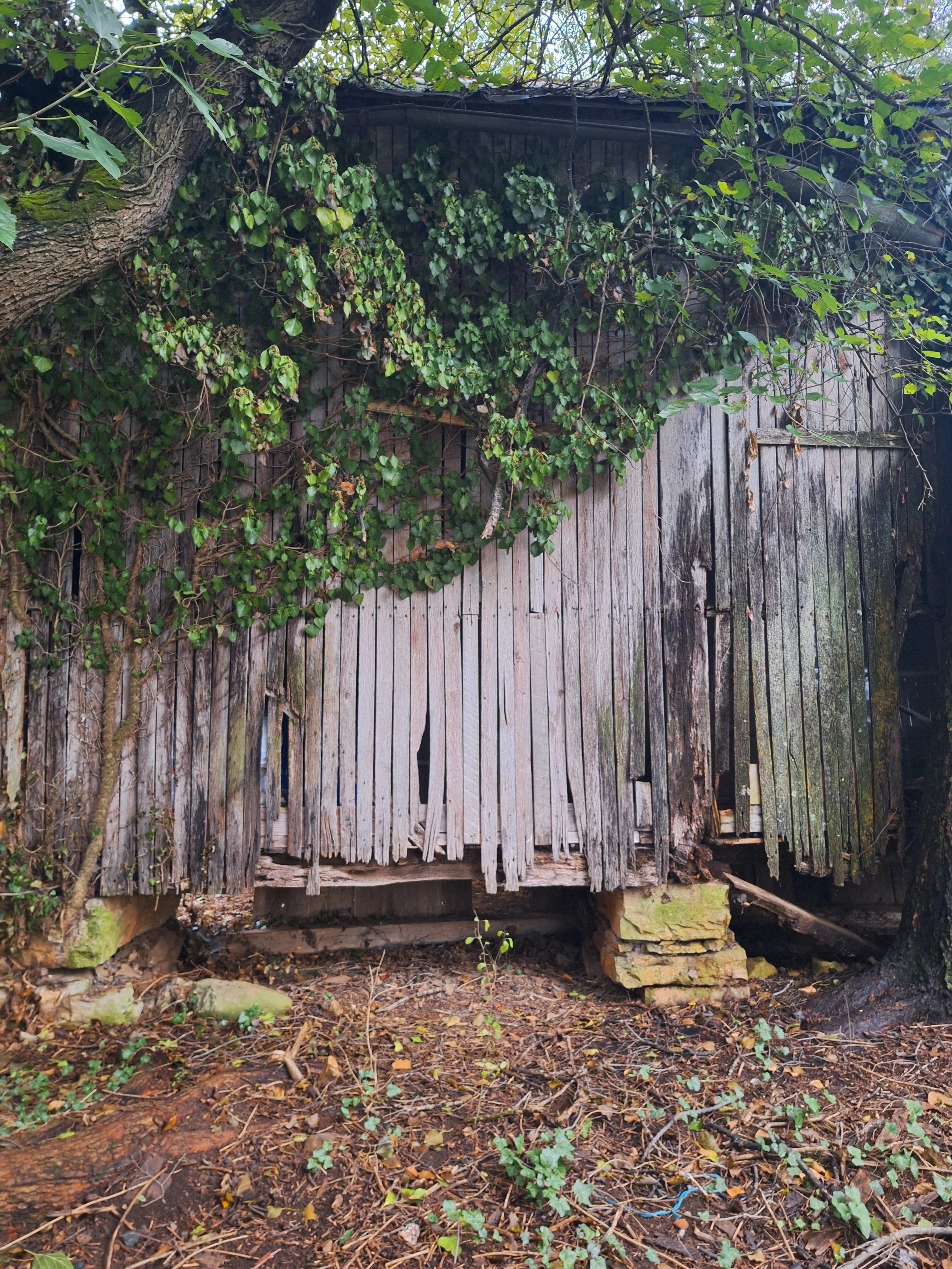
It takes time for the ivy to die. One month later after treatment & the Ivy is still green!
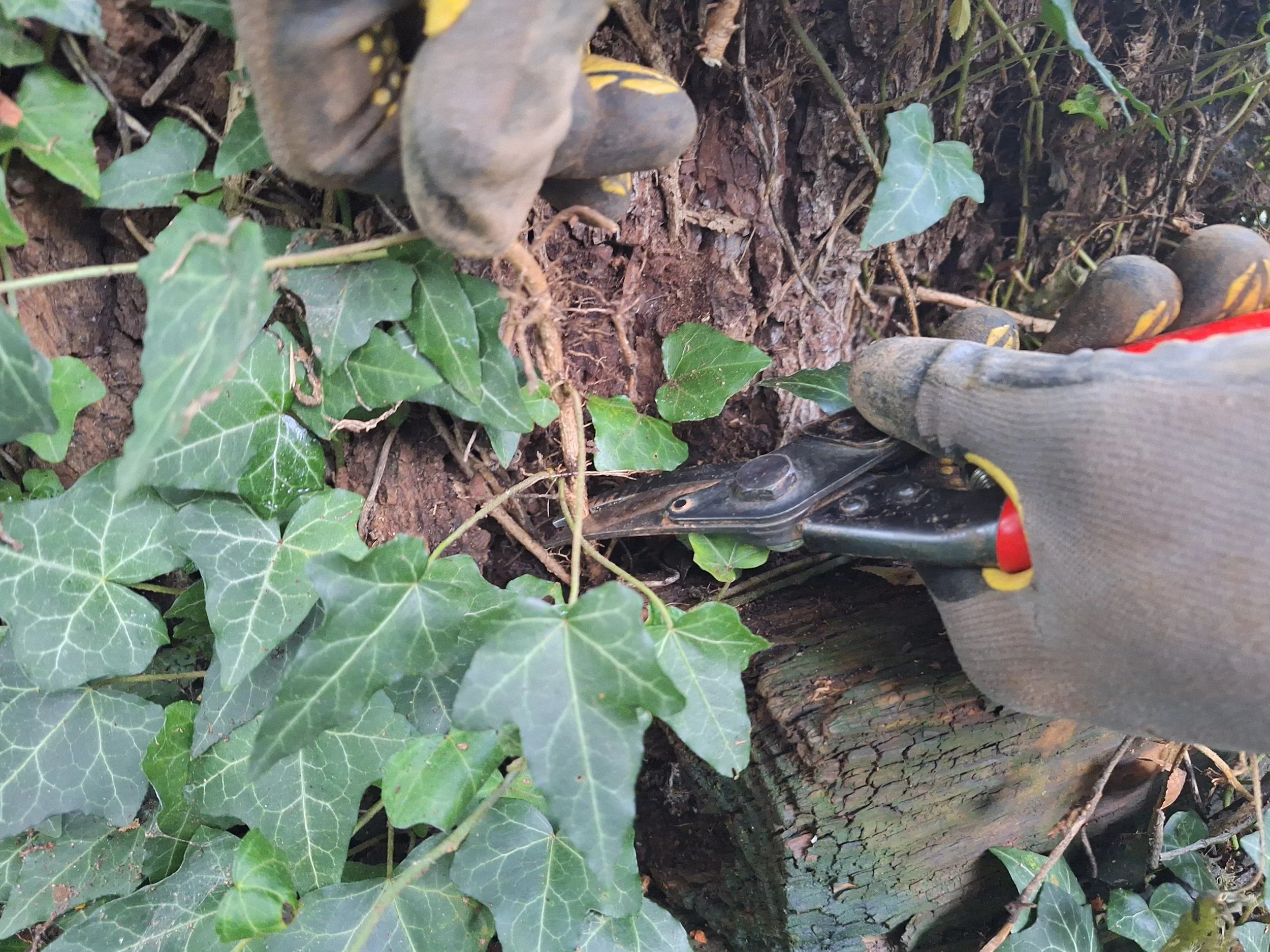
cutting the stem or stump of an invasive English ivy vine.
If herbicide is not for you, English ivy can also be reduced and eliminated over time through diligent hand-pulling and cutting. Follow the same advice above, cutting the vine at the ground, but don’t treat it, and hand-pull all of the ivy sprawling on the ground. Non-chemical methods will require follow-up multiple times per year for several years to ensure the plants are fully dead.
You can do it! It may feel overwhelming at times, but remember that doing something is better than doing nothing – action is the antidote to despair and replacing the ivy with a native alternative can bring joy for years to come. Try Virginia creeper (Parthenocissus quinquefolia) for a similar wall-climber with bonus high-quality berries for birds or trumpet honeysuckle (Lonicera sempervirens) for a climber with a splash of color in summer.
Resources:
English Ivy (Hedera helix) Info & Removal Tips Fact Sheet (PDF) from PA DCNR
PA DCNR Invasive Species Site: http://www.dcnr.state.pa.us/ conservationscience/invasivespecies/index.htm
Learn more about Invasive Plants on ACWA webpage