Helping Local Raptors: The MD Farmland Raptor Program in Washington County
MD Farmland Raptor Program will be hosting an information table with American Kestrel box building opportunities at our Fall Nursery Sale on October 3, 2026! Learn more about the event on our Calendar
The Maryland Farmland Raptor Program (FRP) is working to understand and reverse significant population declines of farmland raptors in Maryland’s open grasslands, agricultural areas, and marshes. Unfortunately, these habitats have become increasingly scarce, and the loss has contributed to steep population declines. Farmland raptors identified as species of greatest conservation need include:
· the American Barn Owl,
· the American Kestrel,
· the Short-eared Owl, and
· the Northern Harrier.
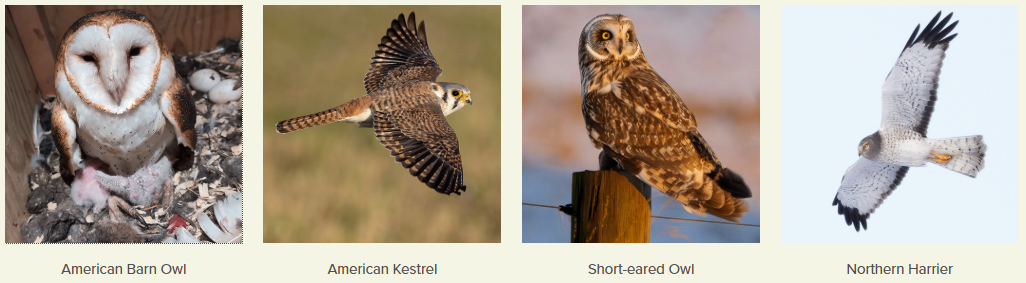
Raptor images from the MD FRP Website: marylandbirds.org/farmland-raptors
These species typically require large areas of grassland or agricultural fields (free from rodenticides and pesticides) to nest successfully, where they dine on mice, grasshoppers, and voles and help keep the ecosystem in balance. MFRP takes direct actions to mitigate challenges facing two of these species (the barn owl and the kestrel). Their program:
installs nest boxes for barn owls and kestrels to increase nesting opportunities
monitors nest success of barn owls and kestrels
documents distribution and population trends for barn owls and kestrels
collects data on short-eared owl distribution, movements, and habitat use
maintains a long-term repository of Maryland-specific information for all four species to support regional and national research efforts
MFRP also provides outreach and education to share information on major threats to farmland raptors, primarily habitat loss/fragmentation and pesticides.
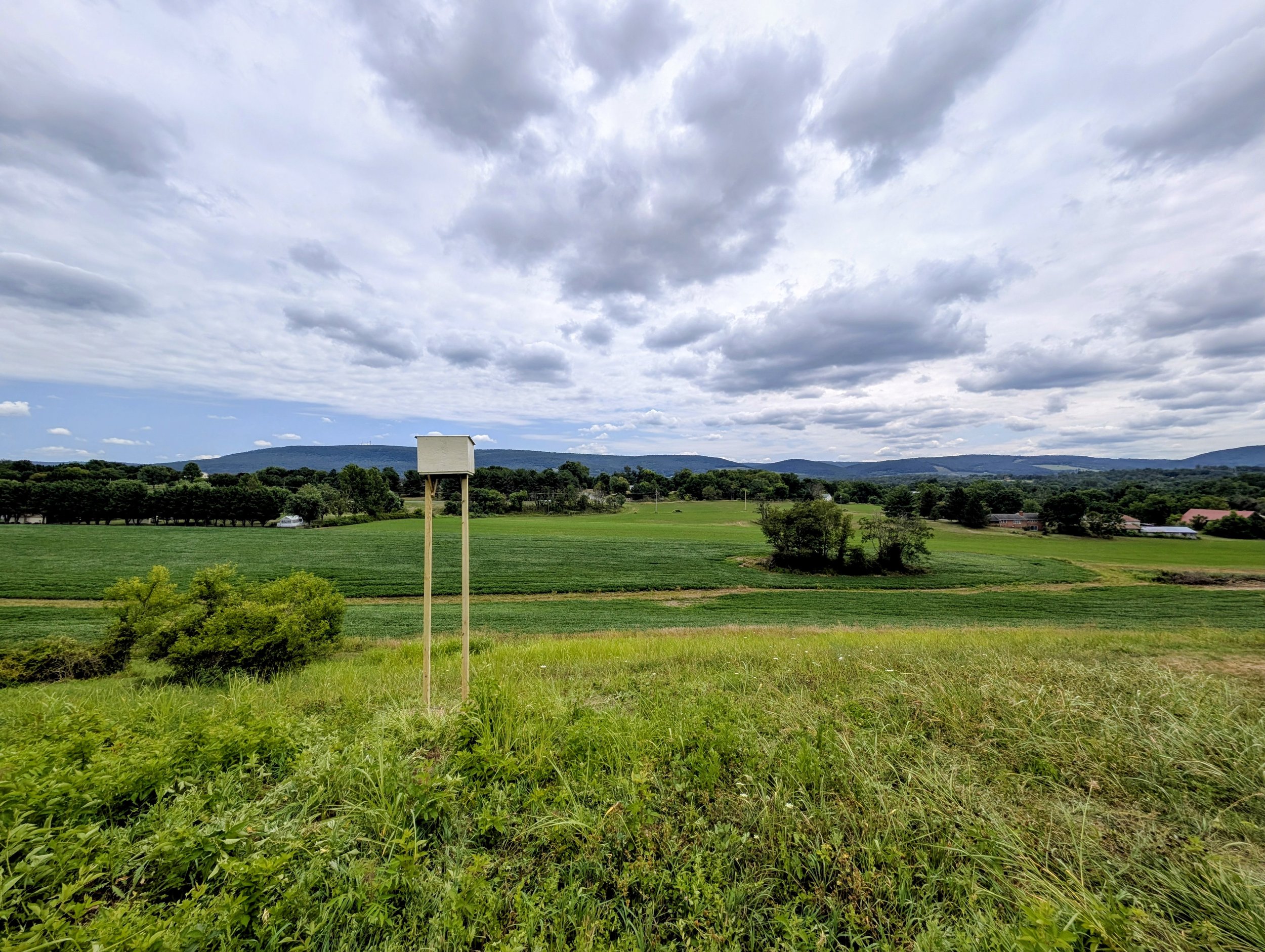
Pole-mounted Barn Owl Box in Smithsburg, MD (photo supplied by MFRP)
Preferred Raptor Habitat
All four of FRP's target species need healthy prairie or prairie-like (agricultural) and marsh ecosystems (herbicide/pesticide free!) in which to hunt for one of their most important prey items; meadow voles. Meadow voles thrive in pastures and grassland ecosystems dominated by native prairie grasses and perennials, which is what they rely on for food. During warm weather, the American kestrel even shifts their diet to include an abundance of insects that share this habitat, such as grasshoppers, beetles, and dragonflies. Healthy grasslands further protect our waterways where dragonflies breed, as well as reduces runoff, and protects the land itself from being lost to erosion.
Farmland raptors are losing their habitat primarily due to intensive agricultural shifts, land development, and modern farming practices that destroy nesting sites and deplete their food supply. This includes of loss of hunting fields and use of chemicals which poison food supply (insects & small mammals).

Checking the number of a banded Barn Owl. (photo from MFRP)
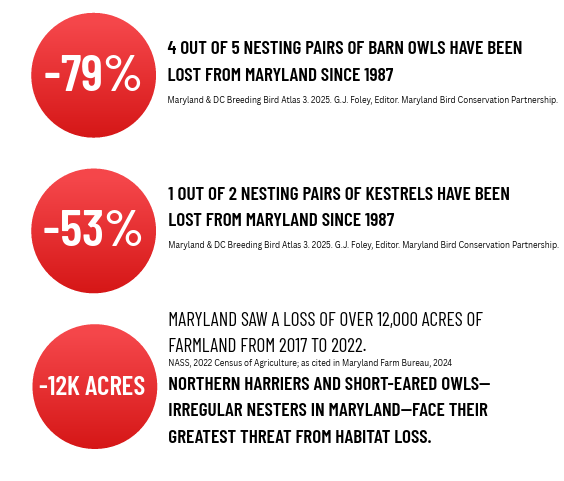
Statistics from the MFRP Summary Sheet (1)
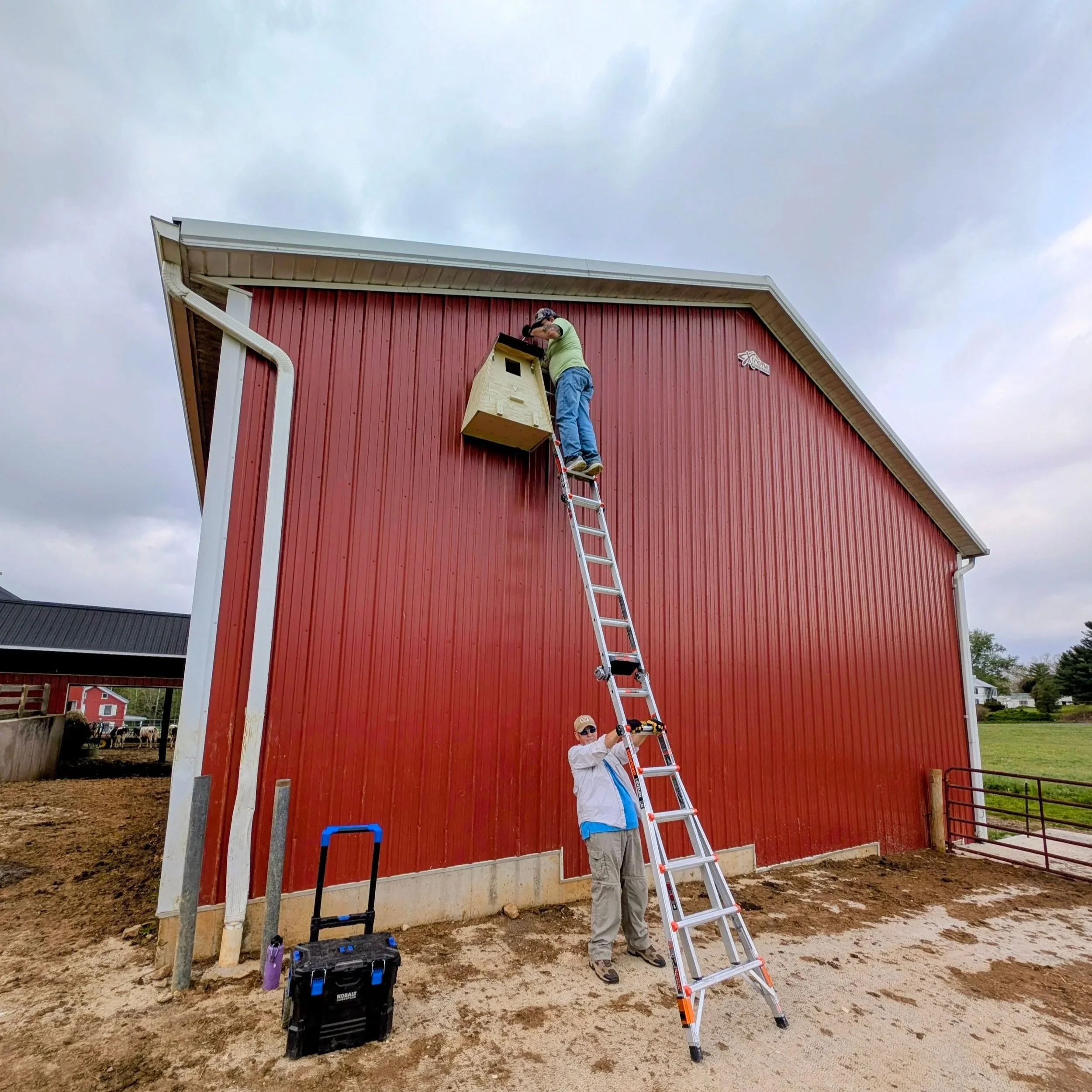
Barn Owl Box install on a barn in Boonsboro, MD (photo submitted by MFRP)
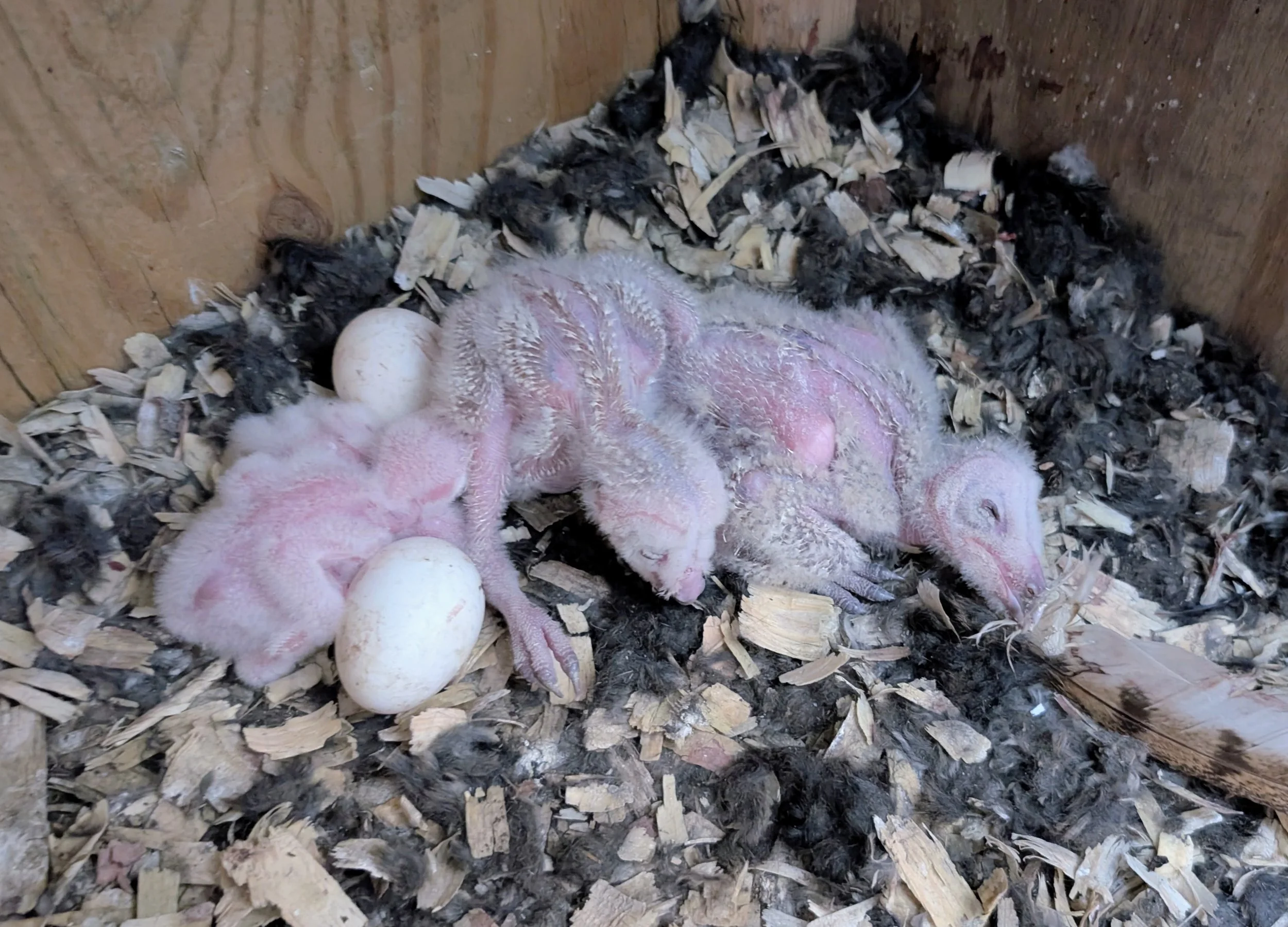
Barn owl chicks in a box installed on the Eastern Shore (photo submitted by MFRP)
Invasive plant species, found throughout residential landscapes and escaped into our fields and forests, do not support the prey that these raptors need to, not only survive, but to breed and successfully raise their young. Invasive species also tend to outcompete native species, further reducing food availability for prey, which in turn reduces food available for these birds. Starvation is the most common cause of brood reduction (loss of chicks as they grow and develop in the nest).
Native plants support farmland raptors by providing essential hunting grounds, reliable food sources, vital perches, and safe roosting cover.(2) Native plants are naturally adapted to local climates and pests, which decreases the need for chemical pesticides and rodenticides that can accidentally poison top predators through the food chain. (3)
Safe nesting space, such as dead trees and natural cavities are increasingly rare in modern and suburban Maryland landscapes but are a vital habitat need for raptors’ struggling populations. In the case of kestrels, invasive European Starlings even compete for the limited available nest cavities.
Nest Boxes offers safe space for American Barn Owls and American Kestrels to build nests and rear young. Boxes can be installed to attract farmland raptors to your property and can reduce the need for pesticides, support declining populations, and bring the beauty of birds of prey back into agricultural landscapes.
The MFRP monitors more than 200 nest boxes across the State with the number of sites growing each year, including now Washington County, MD!

AWCA volunteer with newly installed nest box in a Sharpsburg silo (photo submitted by MFRP)
Local Efforts & Successes
The MFRP has a new chapter in Washington County, led by volunteers Michelle and Jayson Huston. Since January of this year (2026,) they have been identifying landowners willing to host nesting boxes and coordinating volunteers to help build, install, monitor, & maintain the boxes.
Several ACWA members have already connected with the Huston’s to host a nest box on their personal properties. Member Nick Hinze was one of the first property owners to sign up with the local Washington County Chapter. MFRP were able to install a barn owl and a kestrel box at the Hinze farm in South County. Nick explained that hosting the boxes is an easy way to support native wildlife with very little time commitment for the property owner. MFRP volunteers would come to check on the boxes periodically, but there was little else required to host the nesting boxes. MFRP were able to install the boxes at Nick’s property in February of this year however adult raptors have not yet made the boxes their home. Nick reports that adult owls and kestrels have been sighted in their area and he is hopeful to see raptor chicks in future years.
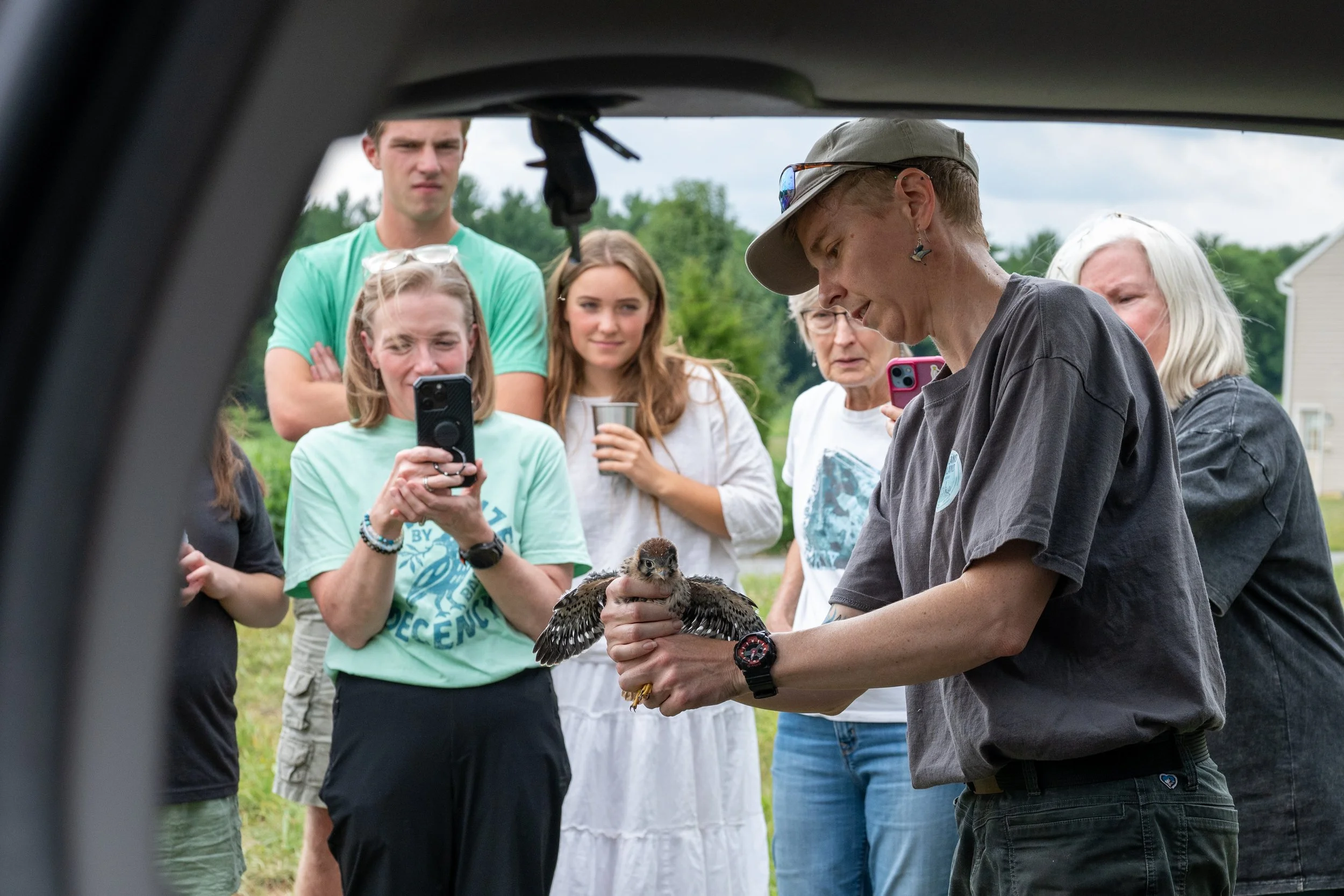
Banding Kestrel Chicks in Williamsport, MD 2026 (submitted photo by MFRP)
Chicks! Recently, Maryland Bird Conservation Partnership volunteers were rewarded for their efforts in Washington County when American Kestrels occupied four nest boxes they installed under the MFRP. In these boxes, 17 kestrel chicks were hatched and raised. The volunteers and landowners were again rewarded at a kestrel banding event in August, where some volunteers were able to directly participate and interact with the chicks.
As more nest box sites are installed throughout Washington County, the Hustons are looking forward to counting more raptor chicks and supporting a growing population of farmland raptors in our region. Your help is needed to protect farmland raptors!
How Can You Help?
Install, Sponsor or Build a Nest Box: build and install nest boxes for barn owls and kestrels; we’d love to include your nest boxes in our program. (Info on building a box)
Volunteer with FRP: Assisting with FRP box building (cutting, assembling, &/or finishing), installation, or maintenance.
Report sightings: Share your observations with FRP.
Spring Monitoring: Checking boxes (April-June), removing non-native species (European starlings and Rock doves), and reporting to the program on the activities at the nest box.
Summer/Winter area surveillance for short-eared owls and northern harriers is another, as well as trapping and banding of American barn owls and kestrels (typically May through July) and short-eared owls and northern harriers (December through March) is also needed. There are no minimum hours or set schedules.
Limit Pesticide Use to support habitat health.
Plant native plants: Planting natives is easy, and can help provide food and habitat for a larger number of birds. (See FRP resources on native plants)
Assist with photo/video promotional materials for FRP
Donations: Financial contributions, supplies (e.g., lumber), or tools are always welcome.
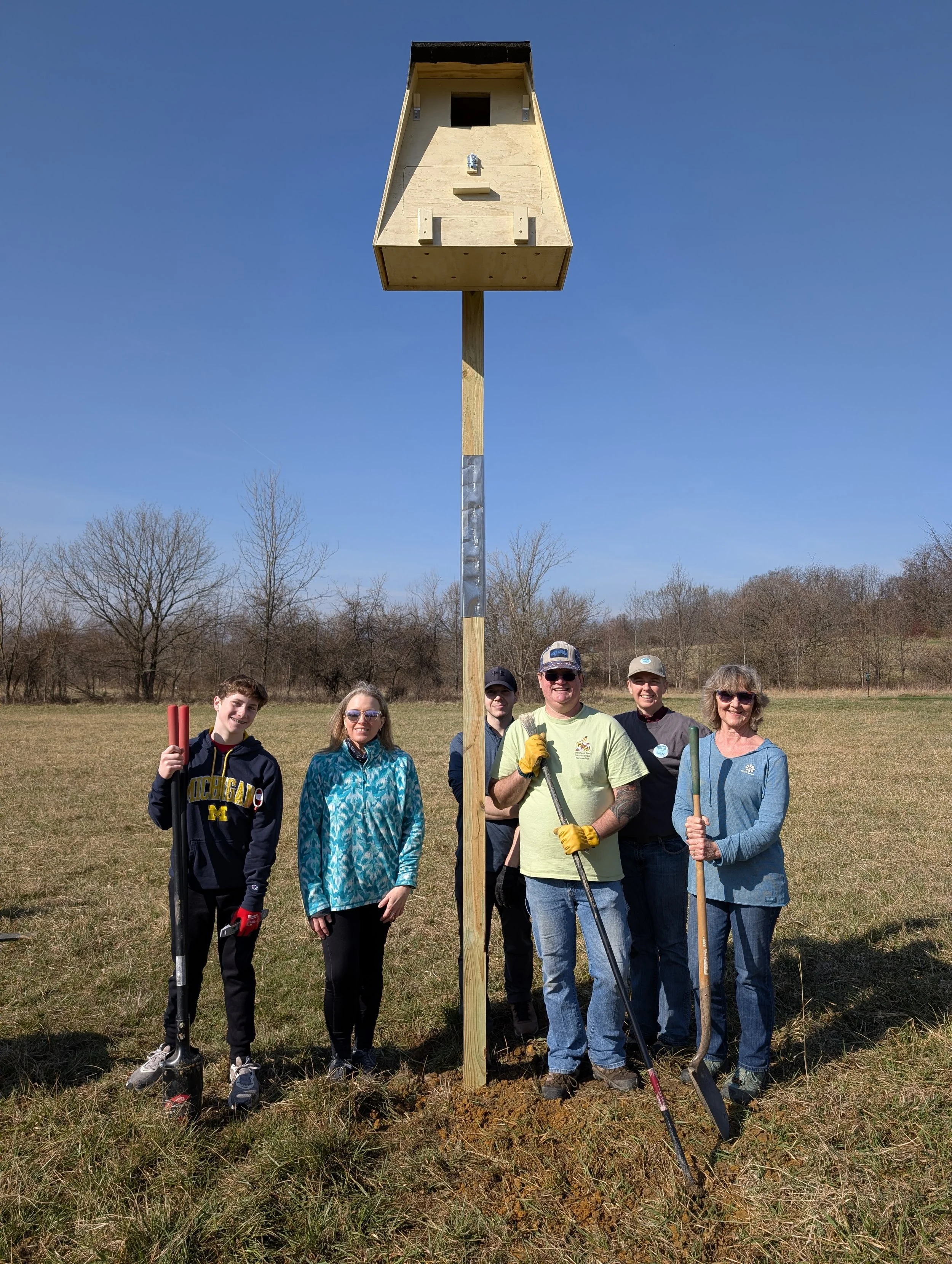
Boonsboro volunteers with newly installed Kestrel Box (photo submitted by MFRP)
Read more about the program at https://marylandbirds.org/farmland-raptors
Resources
Maryland Bird Conservation Partnership’s Farmland Raptor Program Summary Fact Sheet (PDF)
UMD Raptors Offer Natural Solution for Farm Pest Management https://extension.umd.edu/news-events/news/raptors-offer-natural-solution-farmland-pest-management/
The Power of Raptors for Pest Control, Wild Farm Alliance. https://www.wildfarmalliance.org/new_video_the_power_of_raptors_for_pest_control
Host a Farmland Raptor Nest Box Fact Sheet, MFRP (PDF)