Student helps track Nitrates on Antietam Creek
Hello, my name is Talia. I am 20, an Environmental Science / Biology Major at St. Mary's College of Maryland, and my goal, by and after the end of my education, is to assist as much as possible towards the effort of slowing - and hopefully reversing - the slow decline of our natural world. All big things start small, and so I thought there was no better place to start than seeing what I could do for my local community of Hagerstown during my summer break.
I reached out to ACWA to see how I could assist and I chose to take nitrate samples through the Izaak Walton League's Nitrate Watch Program with a goal to upload my results during their Nitrate Pollution Awareness Week (July 26 - August 1, 2026).
First I had to establish the sites at which I was going to take consistent samples. Noticing the lack of sites in my area on the Antietam, I eventually singled at three public parks with river access:
Roses Mill,
Kiwanis, and
Devil's Backbone.
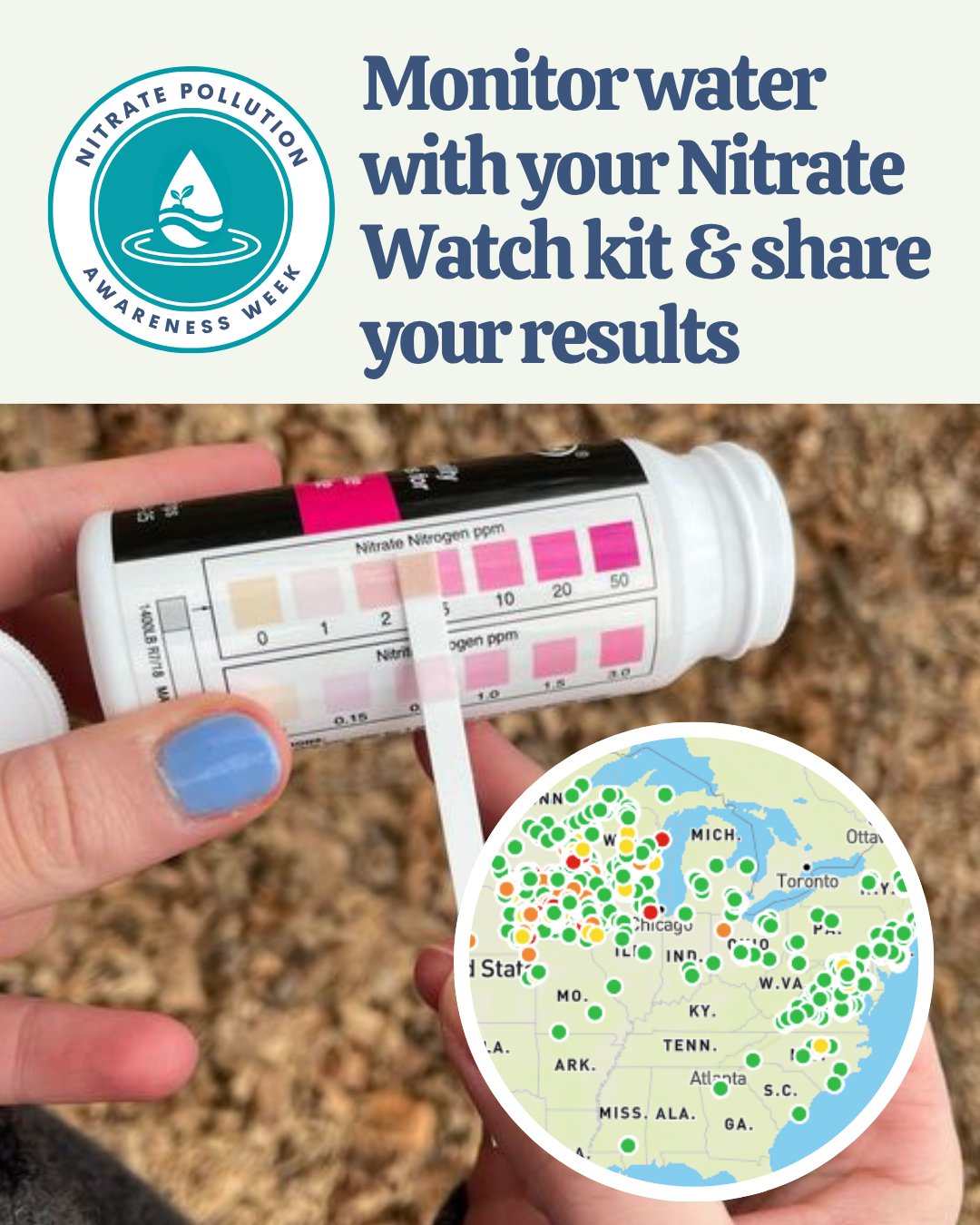
Throughout the month of July, I would take a day every couple days to go out and take nitrate samples - utilizing a nitrate kit provided to me by ACWA - and note down the day, time, location, and nitrate concentration in parts per million, which was as simple as taking a test strip, dipping it into the desired water source, and making judgement based on the color it turned after the fact. At the end of the month, during Nitrate Week, I compiled all of this data onto the Nitrate Watch section on the Clean Water Hub webpage for all three of my monitoring sites.
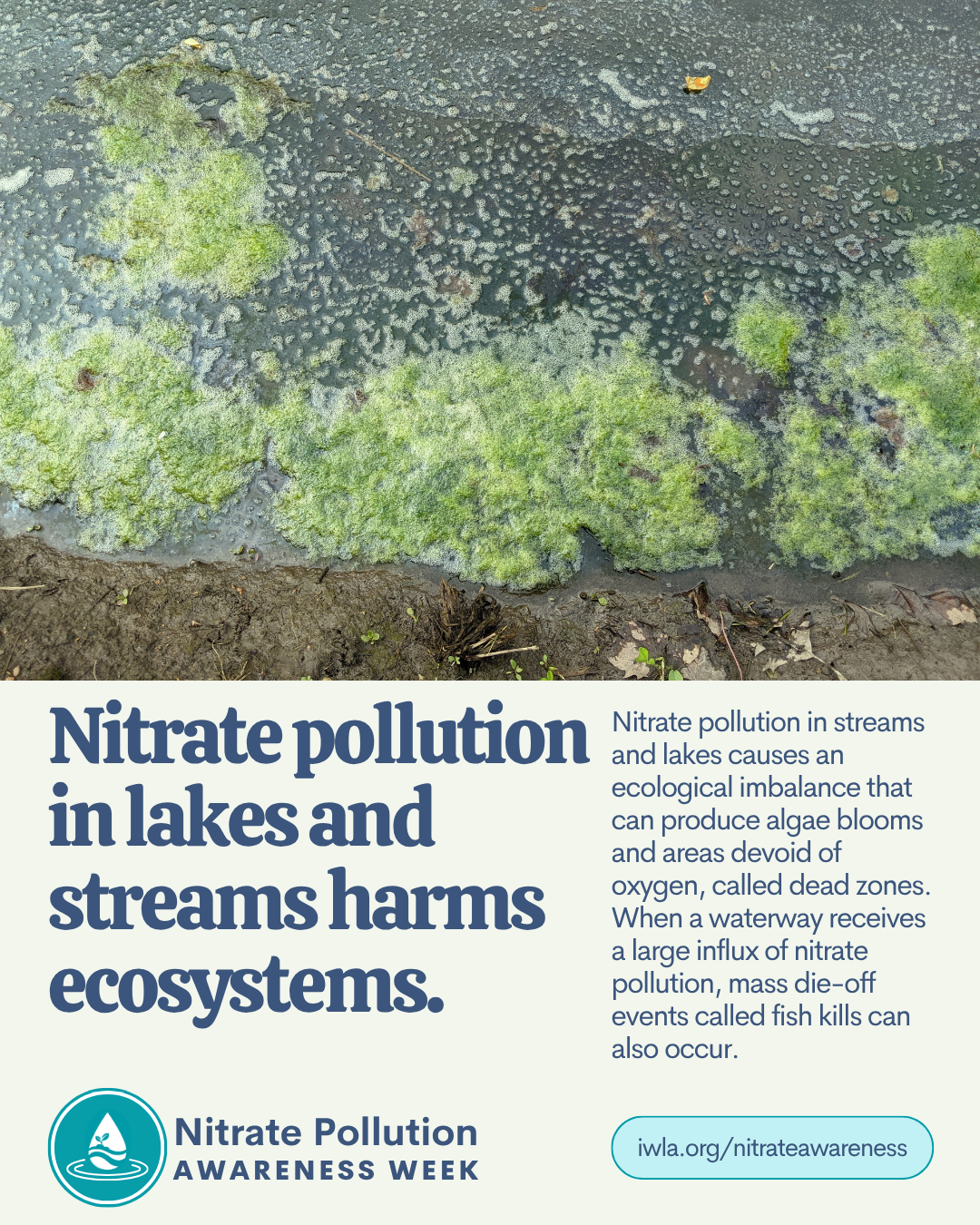
I've noticed a couple of interesting trends while taking these measurements; the main one being that the population density around any given site tended to influence how clean the readings were. Kiwanis was by far the highest, as it was located just off the side of a road containing several commercial buildings that I would imagine all produce some nasty runoff. Meanwhile, Devil's Backbone, which is mainly located off a road through the woods and only has a select few houses next to it, was relatively clean the entire month comparatively. This goes to show that even if you think nitrate runoff can't be that large of a problem in your area, it never hurts to go and check - you'd never know for sure without doing so. Nitrate buildups like these can cause several adverse effects to both stream health, such as the development of ecological dead zones, and to human health, as nitrate in large concentrations isn't healthy for our bodies. Especially on the mainly limestone foundations of this section of Maryland, nitrated waters can easily leak from one water system to another, making a problem for one water source a problem for all of them; It's for reasons like this why keeping tabs on the nitrate in our water is especially important.
The three sites that I monitored are public access for anyone else to monitor (or even contribute to, should someone want to pick up where I left off.)
If you want to help out, see if you can get your hands on a nitrate watch kit from the Isaac Walton League (Request one here), and look around for spots near you with no history of nitrate monitoring. It's simple, quick, and you'd be doing all of us - and the planet as a whole - a great service by showing people what and where they have to advocate for changes. Every ounce of assistance helps, and we're going to need a lot in order to secure a future for those who will come after us. Thank you for your time - I hope this has inspired you to assist in whatever way you see fit as well.